Unlock Your Potential: How to Set Gaming Goals and Track Progress Like a Pro Gamer
In the vast, dynamic world of gaming, it's easy to get lost in the endless grind or simply play for fun. While casual play has its undeniable joys, many gamers, from aspiring esports pros to those simply wanting to climb a few ranks, yearn for something more: consistent improvement, tangible achievements, and the satisfaction of mastering their favorite titles. This journey from good to great, or even just from beginner to competent, isn't accidental. It's a deliberate path paved with clear goals, meticulous tracking, and often, a touch of coaching wisdom. Welcome to the GameHub guide on how to set powerful gaming goals and track your progress effectively, transforming your gameplay into a strategic pursuit of excellence.
Whether you're battling in the highly competitive arenas of a first-person shooter, executing complex strategies in a real-time strategy game, or pushing the limits in a challenging platformer, understanding your objectives and monitoring your growth is the ultimate cheat code to long-term success. We will dive deep into frameworks used by top esports athletes, explore practical tools for performance tracking, and even touch upon how a coaching mindset, whether self-directed or professional, can elevate your game to new heights. Prepare to turn your gaming sessions into productive training, leading to true skill development and an unprecedented level of game mastery.
Why Setting Gaming Goals is Your Next Power-Up
Think about any successful endeavor in life – it always starts with a goal. Gaming is no different. Without specific gaming goals, you're essentially sailing without a compass, hoping to randomly stumble upon an island of improvement. While some incidental progress might occur, it will likely be slow, inconsistent, and frustrating. Goal setting provides direction, motivation, and a clear benchmark for success, directly impacting your skill development and overall game improvement.
Statistically, individuals who set clear goals are significantly more likely to achieve them. Studies outside of gaming, often cited in productivity circles, suggest that simply writing down your goals can make you up to 42 percent more likely to succeed. Translating this to gaming, imagine how much more effective your practice routines could be if every session was aimed at a specific, measurable target. Instead of "play more," your goal becomes "improve my last-hitting by 10 per minute in the first 10 minutes of a League of Legends game." This specificity is what drives actual progress.
Clear objectives help you prioritize your efforts. In a game like Valorant, for instance, you might have dozens of skills to improve: aim, crosshair placement, utility usage, map awareness, comms, economy management. Without a goal, you might dabble in all of them superficially. With a goal like "increase my headshot percentage by 5 percent on pistol rounds," your focus sharpens, and every pistol round becomes a targeted practice opportunity. This focused approach accelerates learning and solidifies new habits, which is crucial for competitive gaming.
Moreover, achieving even small gaming goals provides a powerful boost to your motivation and confidence. Each completed objective acts as a mini-achievement, reinforcing positive behaviors and encouraging you to tackle bigger challenges. This intrinsic reward system is far more sustainable than simply chasing leaderboard ranks, which can be inconsistent and often dependent on factors outside your control, like teammates or server issues.
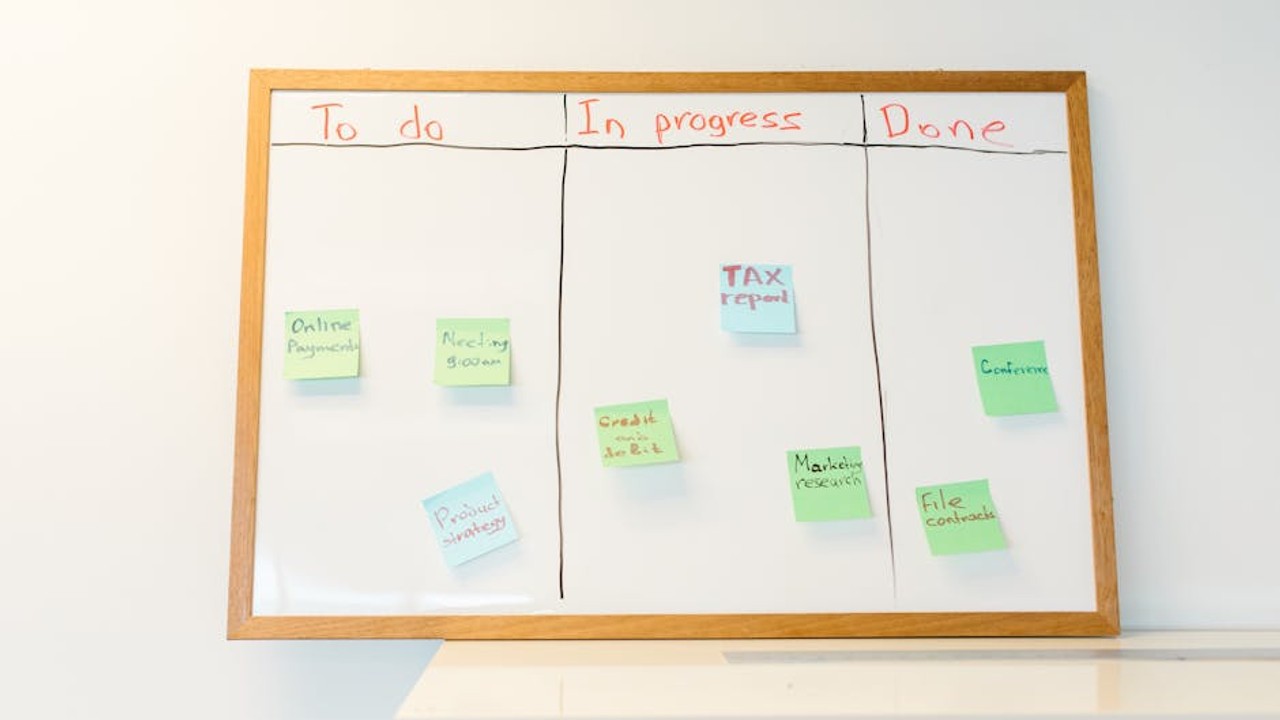
The SMART Framework: Your Blueprint for Gaming Success
The SMART goal framework is a widely recognized methodology for setting effective objectives, and it translates perfectly into the gaming world. By ensuring your gaming goals are Specific, Measurable, Achievable, Relevant, and Time-bound, you create a robust plan for success. Let's break down each component with practical gaming examples.
Specific: Pinpointing Your Gaming Targets
A specific goal answers the "what," "why," and "how." Instead of a vague desire like "get better at Fortnite," a specific goal might be: "Improve my close-quarters combat (CQC) proficiency in Fortnite by consistently hitting 75 percent of my shotgun shots within 10 meters."
What: Improve shotgun accuracy in CQC.
Why: To win more early-game fights and secure better loot.
How: Focus on pre-aiming, movement during engagements, and practicing in creative maps.
The more detailed your goal, the clearer your path to achieving it becomes. Specificity helps you identify the exact skills you need to hone.
Measurable: Quantifying Your Gaming Progress
Measurable goals allow you to track progress and know when you've reached your objective. How will you know if you've "improved"? You need a metric. Using the Fortnite example, "hitting 75 percent of my shotgun shots within 10 meters" is a clear, quantifiable metric.
Examples of measurable gaming goals:
Increase my average CS (Creep Score) per minute in Dota 2 from 6.0 to 7.5 over the next month.
Achieve a K/D (Kill/Death) ratio of 1.5 in Call of Duty Warzone in my next 20 games.
Successfully execute the 'Wave Dash' technique 9 out of 10 times in Rocket League training packs within two weeks.
Without measurable targets, progress feels subjective and hard to celebrate, which can lead to demotivation. Leveraging gaming analytics and in-game statistics becomes crucial here.
Achievable: Realistic Gaming Ambitions
An achievable goal is one that is challenging but not impossible. While it's good to aim high, setting unrealistic goals can lead to burnout and frustration. A professional esports player might aim to win a major tournament, but a casual player might aim to reach a specific rank.
Consider your current skill level, available time for practice routines, and resources. If you're a new player to CS:GO, aiming for Global Elite in a month is likely unachievable. Aiming to exit Silver rank within three months, however, might be. An achievable goal pushes you out of your comfort zone without overwhelming you, fostering consistent skill development.
Relevant: Aligning Goals with Your Gaming Vision
A relevant goal matters to you and aligns with your overall gaming aspirations. Why is this goal important to you? Does it contribute to your larger objective of climbing the competitive ladder, joining an esports team, or simply enjoying the game more?
For example, if your ultimate goal is to become a top-tier support player in an MOBA, then setting a goal to improve your jungle pathing might not be as relevant as improving your ward placement or healing efficiency. Ensure your goals serve a purpose in your personal game mastery journey. Relevance is key for sustained motivation and a focused gamer mindset.
Time-bound: Setting Deadlines for Gaming Milestones
Every SMART goal needs a deadline. A time-bound goal creates urgency and a sense of accountability. "Improve my aim" is open-ended, but "Improve my aim by increasing my average accuracy in Apex Legends by 5 percent within two weeks" has a clear endpoint.
Deadlines help you prioritize your practice routines and prevent procrastination. Break down larger gaming goals into smaller, time-bound milestones. For instance, if your long-term goal is to reach Diamond rank in League of Legends in six months, your monthly goals might be to improve a specific champion's win rate, and your weekly goals could be to watch one VOD review of a pro player using that champion and practice specific combos for 30 minutes daily.

Building Your Gaming Progress Tracking System
Once you've set your SMART gaming goals, the next critical step is to establish an effective system for performance tracking. This isn't just about recording wins and losses; it's about collecting meaningful data that informs your practice, highlights weaknesses, and confirms progress. A solid tracking system is the backbone of data-driven improvement.
Choosing Your Tracking Tools
There are numerous ways to track your gaming progress, ranging from simple to sophisticated:
Spreadsheets (Google Sheets, Excel): This is a powerful, customizable, and free option. You can create columns for date, game played, specific metric (e.g., KDA, accuracy, objectives taken, specific ability usage), notes on performance, and even emotional state. Over time, this data reveals trends.
In-game statistics and profiles: Many modern games offer robust stat tracking built directly into the client. Leverage these for overall KDA, win rates, and specific champion/weapon performance. While good for general overview, they often lack the granularity needed for highly specific goals.
Third-party tracking sites/apps: Platforms like Tracker.gg for Valorant/Apex Legends/Fortnite, OP.GG for League of Legends, Dotabuff for Dota 2, or dedicated coaching platforms can offer deep insights, advanced analytics, and often track metrics not available in-game. These are invaluable for objective, detailed performance tracking.
Gaming journal/notebook: Sometimes, the simplest methods are the most effective. A physical or digital journal where you jot down key observations after each session can be incredibly powerful. What went well? What went poorly? What did you learn? What should you focus on next? This qualitative data complements your quantitative metrics.
The best tracking system is one you will actually use consistently. Start simple and expand as you become more comfortable and identify what data is most valuable for your specific gaming goals.
Key Metrics to Track for Skill Development
Beyond the obvious win/loss record, consider tracking metrics that directly relate to your specific gaming goals and impact your performance:
Accuracy/Headshot Percentage: Essential for FPS games. Track per weapon, per round, or per game.
Economy Management: Track your gold/money earned per minute, or average spending efficiency in strategy games or MOBAs.
Objective Control: How many towers, dragons, or specific map objectives did you contribute to securing?
Ability Usage/Efficiency: Are you using your character's abilities at optimal times? Track stun durations, healing output, or damage mitigated.
Deaths and positioning: Not just KDA, but why you died. Was it bad positioning? Over-extension? Lack of awareness?
Vision Score: In MOBAs, how well are you contributing to map vision through warding?
Mental State/Tilt Factor: Subjective but crucial. Note down instances where you felt frustrated, angry, or overconfident. This helps with the mental game.
The key is to select metrics that are actionable. If you track headshot percentage and it's low, you know to practice aim. If your objective control is low, you know to focus on rotations and timing.
Leveraging Data: Beyond Just Wins and Losses
Tracking data is only useful if you analyze it. This is where the true power of performance tracking comes into play. It's not enough to simply record numbers; you need to understand what those numbers are telling you about your gaming prowess and areas for improvement. This analytical phase is where self-coaching truly begins.
The Power of VOD Review (Video on Demand)
VOD review is arguably the most impactful tool in a serious gamer's arsenal. Recording and re-watching your gameplay allows you to see your mistakes and successes from an objective third-person perspective, which is impossible during the heat of the moment. Many esports professionals dedicate hours to VOD review, often more than they spend actively playing.
When conducting a VOD review:
Don't just watch passively: Actively pause, rewind, and take notes. Use your tracking journal.
Focus on your gaming goals: If your goal is to improve decision-making in late-game team fights, specifically look for those moments.
Ask critical questions:
Why did I make that decision?
What were my options?
What information did I have (or lack)?
What could I have done differently?
What was my opponent doing?
Was my positioning optimal?
Identify patterns: Do you consistently make the same mistake? Do you always get caught out in a specific area of the map? These patterns are your biggest opportunities for improvement.
Review both wins and losses: You can learn just as much, if not more, from a win where you got lucky or made poor decisions than from a loss. Don't let the scoreboard dictate your learning.
Many games allow built-in replay saving, or you can use third-party software like OBS Studio or NVIDIA ShadowPlay to record your sessions. This is a non-negotiable step for serious game improvement.

Identifying Trends and Adapting Your Practice Routines
Consistent tracking over weeks or months will reveal trends. Maybe your accuracy is improving, but your deaths are increasing. This could indicate aggressive positioning that needs adjustment. Or perhaps your economy is fantastic, but you're not converting that into map pressure.
Use these trends to adapt your practice routines. If you notice a consistent weakness, dedicate specific training sessions to address it. For example, if VOD review reveals you struggle with quick peeks in Valorant, spend 15 minutes each day in a custom game specifically practicing quick peeks from various angles. If your team fighting initiation in an MOBA is poor, focus on practicing engaging combos in a sandbox mode.
This iterative process of goal setting, tracking, analyzing, and adapting is the essence of professional-level gaming and continuous skill development. It transforms casual play into deliberate practice.
The Coaching Angle: Self-Coaching and Professional Guidance
Whether you dream of joining an esports team or simply want to reach your personal best, adopting a coaching mindset is invaluable. This involves critically evaluating your performance, understanding learning principles, and seeking feedback. It can take the form of self-coaching or engaging with a professional gaming coach.
Self-Coaching: Becoming Your Own Gaming Mentor
Self-coaching is the process of applying coaching principles to your own gameplay. It empowers you to take ownership of your game improvement journey. The steps outlined above—setting SMART goals, tracking data, and conducting VOD reviews—are fundamental to effective self-coaching.
Key aspects of self-coaching:
Objective Self-Assessment: Be brutally honest with yourself. Where are you truly weak? What are your biggest bad habits? Avoid blame, focus on solutions.
Identifying Learning Opportunities: Every mistake is a learning opportunity. Instead of getting angry, ask "What can I learn from this?"
Developing a Growth Mindset: Believe that your abilities can be developed through dedication and hard work. Avoid fixed mindset traps like "I'm just not good at aiming."
Experimentation: Don't be afraid to try new strategies, builds, or playstyles. Use unranked or casual modes as your testing ground.
Mental Game Management: Recognize and address tilt, frustration, and anxiety. Develop strategies for staying calm and focused under pressure. This might involve deep breathing, short breaks, or positive self-talk.
Engage with your gaming community. Share your VODs with trusted friends or community members and ask for their honest feedback. Often, an outside perspective can spot things you've missed.
Professional Gaming Coaching: Accelerating Your Path to Game Mastery
For gamers serious about competitive advancement, professional gaming coaching can provide an unparalleled boost. A coach offers personalized guidance, expert insights, and a structured approach to skill development that is difficult to replicate through self-coaching alone.
What a gaming coach can provide:
Tailored Training Plans: A coach will assess your current skill level, identify specific weaknesses (often through VOD review and live game analysis), and create custom practice routines designed to address your individual needs.
Objective Feedback: Coaches offer unbiased analysis, highlighting mistakes and providing actionable solutions without emotional attachment.
Advanced Strategies and Meta Insights: They often have a deep understanding of the game's meta, advanced mechanics, and high-level strategies that can be difficult for individual players to discover on their own.
Accountability and Motivation: Regular sessions with a coach provide structure and accountability, helping you stay on track with your gaming goals.
Mental Game Development: Many coaches also help with the psychological aspects of competitive gaming, teaching stress management, tilt prevention, and building resilience.
Efficiency: A good coach can drastically cut down the time it takes to improve by pointing you directly to your critical weaknesses and providing optimized solutions.
Platforms like GameHub's community features often connect aspiring players with experienced coaches, or you can find reputable coaches through esports organizations and dedicated coaching services. Investing in coaching is an investment in your gaming future, providing expert guidance for true game mastery.
Overcoming Obstacles and Staying Motivated
The path to game improvement is rarely linear. You'll encounter plateaus, frustrating losses, and moments of self-doubt. Staying motivated and resilient is as critical as any technical skill. This is where your well-defined gaming goals and tracking system become your anchors.
Dealing with Plateaus
Every gamer experiences plateaus—periods where progress seems to stall despite consistent effort. When this happens:
Revisit your data: Look at your tracking logs and VODs. Is there a new pattern emerging? Are you consistently making the same mistake but not correcting it?
Change your approach: If what you're doing isn't working, try something new. Experiment with different practice routines, watch different pro players, or focus on a completely different aspect of the game for a short period.
Take a break: Sometimes, stepping away from the game for a day or two can reset your mind and help you return with a fresh perspective.
Seek external feedback: This is a great time to ask a friend, mentor, or coach for an outside perspective. They might spot something you're too close to see.
Maintaining Motivation
Celebrate small wins: Acknowledge and celebrate every time you hit a measurable target, even if it's a small one. These small victories build momentum.
Connect with your "Why": Regularly remind yourself why you set these gaming goals in the first place. What is your ultimate vision for game mastery?
Vary your practice: Monotony can kill motivation. Mix up your practice routines with fun games, different modes, or even other games entirely to prevent burnout.
Focus on the process, not just the outcome: While outcomes like rank are important, focusing too much on them can be demoralizing during losing streaks. Instead, focus on executing your process goals (e.g., "I will hit 75 percent of my shotgun shots"). If you execute your process, the outcomes will eventually follow.
Community Support: Engage with the GameHub community. Share your progress, challenges, and learn from others. Being part of a supportive group can be a huge motivator.
Remember, true game improvement is a marathon, not a sprint. Consistency, patience, and a strategic approach rooted in goal setting and performance tracking are your most potent weapons.
Conclusion: Your Journey to Gaming Excellence Starts Now
Setting gaming goals and diligently tracking your progress isn't just a suggestion for serious players; it's a fundamental requirement for unlocking your full potential. By adopting the SMART framework, building a robust tracking system, leveraging powerful tools like VOD review and analytics, and embracing a coaching mindset—whether self-directed or through professional guidance—you transform your gaming experience. You move from aimless play to purposeful practice, from frustration to consistent skill development, and ultimately, to achieving the game mastery you've always dreamed of.
Every pro player, every top streamer, and every player who has climbed the ranks has done so through a combination of talent, hard work, and smart practice. Now, armed with these strategies, you have the roadmap to follow in their footsteps. Stop wondering how to get better and start actively building a strategy for game improvement. Your next achievement unlocked is within reach.
Ready to put these strategies into action and find your next challenge? Explore the vast collection of games on GameHub today or connect with fellow gamers and potential coaches in our vibrant community! Browse Games or Join the Community
Ready to Level Up Your Gaming Experience?
Join the GameHub community and discover your next favorite game!
Explore Games