Tactical Shooter In-Depth Mechanics & Strategy
Tactical FPS · Open Gaming Now
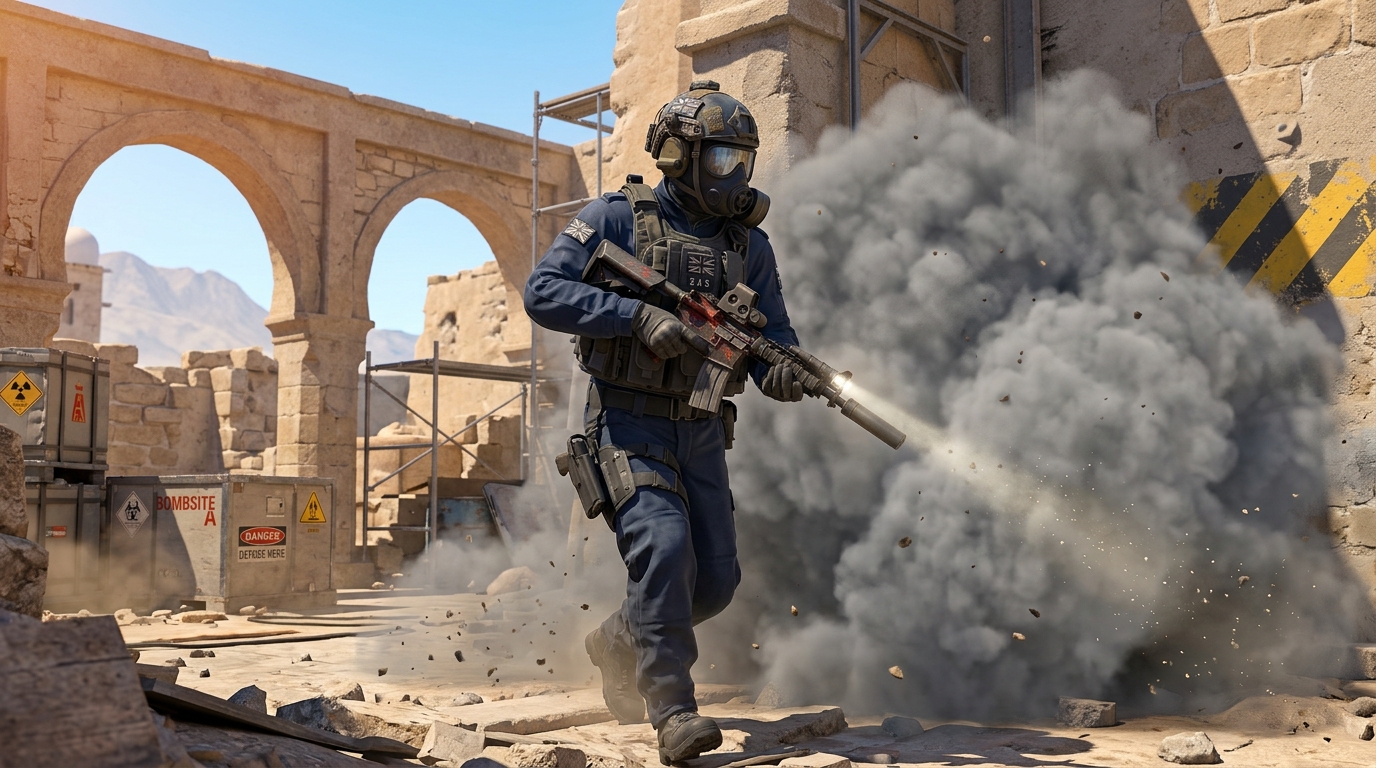
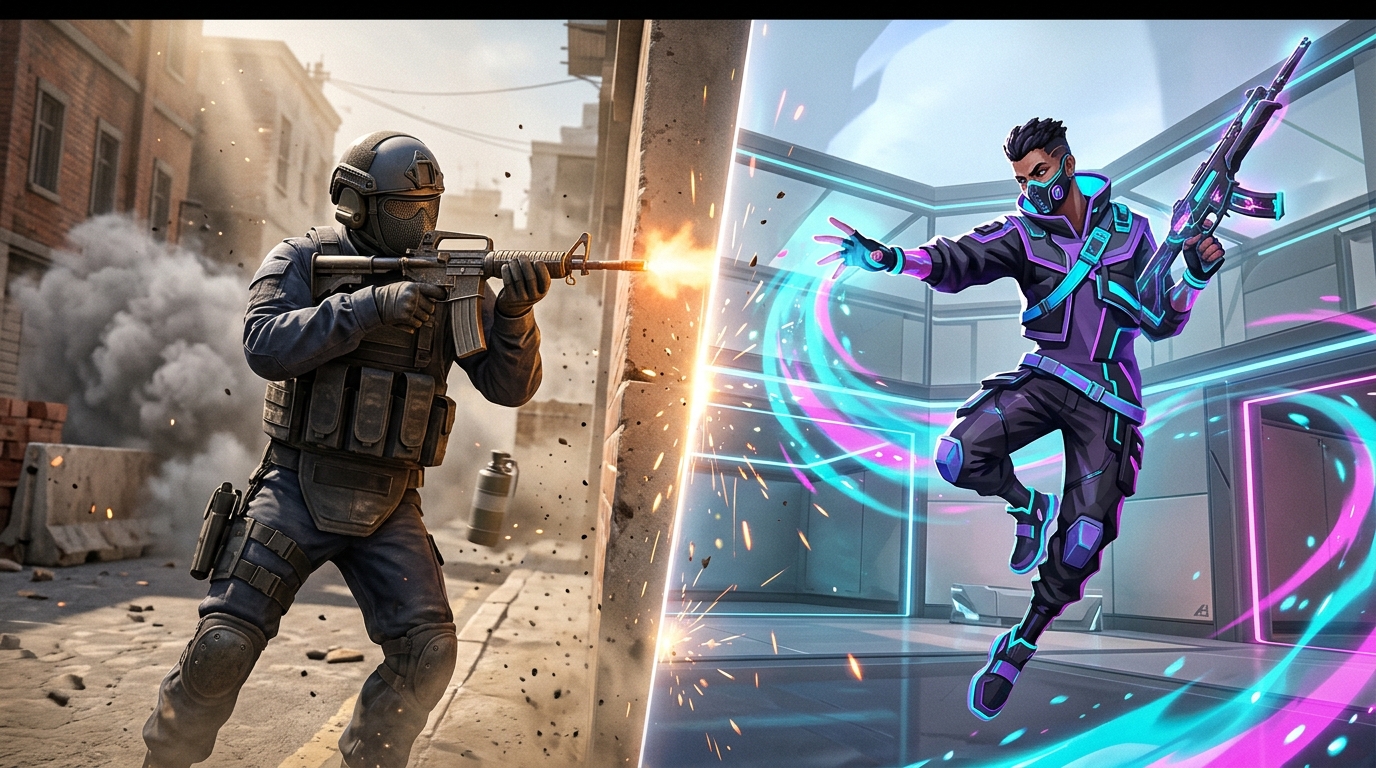
The world of competitive tactical shooters is dominated by two titans: Valve’s Counter-Strike 2 (CS2) and Riot Games’ Valorant. Both demand lightning-fast reflexes, impeccable aim, and strategic brilliance, yet they offer distinctly different experiences. For newcomers and seasoned players alike, deciding which title to dedicate your competitive hours to requires understanding the raw, unforgiving recoil physics of CS2 versus the ability-driven utility combat of Valorant.
As gaming content writers for Open Gaming Now, we understand the nuances that separate these communities and gameplay philosophies. We’ll delve into everything from core mechanics and character design to esports ecosystems and community vibes, providing you with the insights you need to make an informed decision and find your next competitive home.
A Legacy of Precision vs. A Splash of Innovation: Core Philosophies
At their hearts, both Valorant and CS2 are 5v5 tactical first-person shooters where teams alternate between attacking and defending objectives. However, their fundamental approaches to achieving victory diverge significantly, shaping every aspect of their gameplay.
The CS2 Ethos: Pure Skill and Muscle Memory
- Raw Aim: Success is primarily dictated by your ability to control weapon recoil, land headshots, and out-aim opponents in duels.
- Utility Mastery: Grenades (smokes, flashes, molotovs, HE grenades) are universal tools requiring precise timing and knowledge for effective map control and entry fragging.
- Map Knowledge: Deep understanding of map layouts, angles, and common positions is crucial for advantageous engagements and tactical rotations.
- Economy Management: Strategic purchasing of weapons and utility based on round wins/losses is a critical layer of team strategy.
In CS2, there are no unique character abilities to bail you out; it’s just you, your gun, and your wits against the enemy. This makes for an incredibly satisfying, albeit often brutal, learning experience.
Valorant’s Vision: Agent Abilities and Strategic Layers
- Ability-Driven Gameplay: Agents possess distinct sets of skills – from defensive walls and healing to offensive flashes and teleportation – that complement traditional gunplay.
- Team Composition: The combination of Agents on a team is a strategic decision that heavily influences the team’s approach to attacking and defending.
- Dynamic Engagements: Abilities can create unique angles, deny vision, initiate pushes, or hold sites in ways not possible in CS2, leading to more varied and often more explosive encounters.
Valorant balances the precise gunplay of its predecessor with an emphasis on creative ability usage, making for a game where strategic synergy between Agents is just as important as individual aim. Competitive players frequently analyze Valorant tactical FPS to sharpen their tactical fundamentals.
Gameplay Mechanics: A Deep Dive into the Battlefield
While both games task you with planting or defusing a bomb, the moment-to-moment gameplay experience feels distinct due to fundamental mechanical differences.
Gunplay and Recoil Control
This is arguably the most significant differentiator. Both games require masterful recoil control, but the execution and feel are notably different.
- CS2: Features highly consistent and predictable spray patterns for each weapon. Mastering a weapon means learning its specific spray pattern and counteracting it by pulling your mouse in the opposite direction. Movement inaccuracy is severe; shooting while moving is generally a bad idea beyond very close ranges. Headshots are often one-shot kills with rifles at most ranges, rewarding precision.
- Valorant: While recoil is present and needs to be managed, it’s generally considered less punishing than CS2’s. The spray patterns are often simpler, and the first few bullets are highly accurate. There’s a “reset” mechanic where stopping briefly allows your accuracy to return faster. Movement inaccuracy is still present but slightly more forgiving, allowing for some jiggle peeking and burst firing while strafing. Headshots are critical but not always a one-shot kill with all weapons (e.g., body shots from rifles might take multiple hits).
Economy Systems
Both games utilize an economy system where players earn money for kills, round wins/losses, and planting/defusing the bomb. This money is then spent on weapons, armor, and utility/abilities at the start of each round.
- CS2: The economy is notoriously punishing. Losing multiple rounds in a row can severely cripple a team’s ability to buy full setups. The “round loss bonus” system ensures that losing teams eventually get more money, but eco-rounds (buying cheap pistols or nothing) are a strategic necessity. Understanding when to force buy, eco, or semi-buy is critical for team success.
- Valorant: Also has an economy system, but it’s generally more forgiving. Players earn credits, and abilities are purchased each round (some free, some needing to be bought). The game offers more avenues for credit generation, and a losing streak isn’t as devastating as in CS2. This allows teams to full-buy more often, leading to more “full buys” and fewer eco-rounds, which can make the game feel more consistently competitive.
Utility vs. Abilities
This is where the tactical execution differs most dramatically.
- CS2: Utility consists of universal grenades:
- Smokes: Block vision, crucial for entries and defuses.
- Flashbangs: Blind enemies, creating entry opportunities or defending pushes.
- Molotovs/Incendiaries: Deny areas, flush out enemies, or delay pushes.
- HE Grenades: Deal damage, useful for finishing off low-HP enemies or clearing tight spaces.
- Valorant: Each Agent has a unique set of abilities:
- Signature Ability (Free/Recharges): Often the core identity of the agent.
- Purchasable Abilities: Can be bought each round.
- Ultimate Ability (Charged by kills, orbs, plants/defuses): Powerful, round-changing abilities.
Map Design and Verticality
Map design in both games reflects their core philosophies.
- CS2: Maps are often designed with clear pathways, precise angles, and chokepoints that reward deep map knowledge and utility usage. Verticality is present but less emphasized than in Valorant. Strategic control of specific spots and angles is paramount.
- Valorant: Maps tend to incorporate more verticality, unique entry points, and often have more “gimmicks” or interactive elements (e.g., teleporters, one-way ropes). This design encourages creative use of agent abilities to access elevated positions, block lines of sight, or create unexpected pushes.
Agent Rosters vs. Pure Counter-Terrorists/Terrorists: Character & Strategy
The role of “characters” in each game is a significant divergence point that profoundly impacts strategic depth and player identity. Understanding current shifts in Counter-Strike 2 match provides a meaningful edge during high-stakes sessions.
The Impact of Valorant’s Agents
Valorant’s Agent system means you don’t just pick a weapon; you pick a playstyle and a set of tools that define your role on the team. Agents are categorized into roles:
- Duelists: Entry fraggers, designed to get kills and open sites (e.g., Jett, Phoenix, Reyna).
- Controllers: Block vision and manipulate space (e.g., Omen, Viper, Astra).
- Initiators: Gather intel and push enemies out of positions (e.g., Sova, Breach, KAY/O).
- Sentinels: Hold sites, flank watch, and provide defensive utility (e.g., Cypher, Sage, Killjoy).
CS2’s Universal Toolkit
In CS2, all players on a given side (Counter-Terrorist or Terrorist) have access to the same weapons and utility. There are no unique character abilities. This shifts the strategic emphasis:
- Individual Skill Focus: Success relies purely on individual mechanical skill, game sense, and the collective coordination of utility.
- Pure Team Coordination: Teamplay is about executing complex utility combinations (e.g., smoking off a specific area while flashing an entrance) and coordinating pushes or retakes using standard tools.
- Role Flexibility: While players often specialize (e.g., an AWPer, an entry fragger), these roles are defined by preferred weapons and playstyles rather than inherent character abilities.
This design choice results in a game where every player on a team is a potential playmaker with the same basic tools, making raw skill and team communication paramount.
Strategic Depth: A Different Kind of Chess
Both games boast incredible strategic depth, but they manifest differently.
- Valorant: Strategy involves combining agent abilities in creative ways to create advantages. For example, a Sova dart followed by a Breach stun to clear a corner, or a Jett dash through a Omen smoke for an aggressive entry. The meta constantly evolves as new agents are introduced or existing ones are balanced, offering fresh strategic puzzles.
- CS2: Strategy revolves around precise utility usage, map control, and reading opponent tendencies. Executing a perfect B-site rush on Inferno with smokes, flashes, and molotovs requires immense coordination and timing. Counter-stratting an opponent’s common pushes or defaults is a core part of high-level play. The depth comes from the infinite variations of how universal tools can be applied.
Community, Esports, and the Competitive Landscape
Beyond the gameplay, the surrounding ecosystem—community, esports, and anti-cheat—plays a huge role in the long-term enjoyment of a game. Dedicated participants often coordinate through find gaming teammates to maintain long-term competitive consistency.
Player Base and Community Vibe
Both games boast massive, passionate global communities, but they have distinct flavors.
- CS2: With a player base that has evolved over decades, the CS2 community is vast and deeply ingrained in gaming history. While incredibly dedicated, it can also be notoriously hardcore and, at times, toxic. New players might find the learning curve and the community less forgiving. Peak player counts often hover around the 1 million mark on Steam, demonstrating its enduring popularity. The community values legacy, raw skill, and the history of competitive Counter-Strike.
- Valorant: Being a newer game, Valorant’s community is generally seen as slightly more welcoming to new players, although toxicity is still a factor in any competitive game. Riot Games has put a strong emphasis on community engagement and has a more robust in-game reporting system and moderation. The player base skews a bit younger and is often drawn to the vibrant aesthetics and the hero-shooter elements. Valorant regularly sees millions of active players, with strong footholds in North America, Europe, and Asia.
Esports Scene and Spectator Experience
Both games are top-tier esports, but their structures and viewing experiences differ.
Anti-Cheat and Game Integrity
Performance, System Requirements, and Accessibility
Graphics and Visual Fidelity
The visual styles are a clear contrast.
Hardware Demands
Generally, Valorant is more accessible in terms of hardware.
Learning Curve and New Player Experience
Both games have steep learning curves for mastery, but their initial entry points differ. For sustained progression, checking regular updates on pre-match warmup drills helps refine in-game decision making.
Which Game is Right For You in 2024? Actionable Advice
Play Valorant If…
Play CS2 If…
- You value a community that has shaped the history of FPS gaming.
Why Not Both?
Frequently Asked Questions
Counter-Strike 2 generally demands stricter mechanical recoil control and counter-strafing discipline due to deterministic spray patterns and severe movement inaccuracy penalties. Valorant places heavier emphasis on first-bullet accuracy and character utility usage that can offset pure aim duels.
Valorant is engineered with stylized art assets to maintain 60+ FPS on modest budget hardware and integrated graphics. Counter-Strike 2 utilizes Valve’s Source 2 engine with dynamic volumetric smokes and realistic lighting, requiring at least a dedicated mid-range GPU for steady 144Hz or 240Hz competitive play.
Riot Vanguard runs as a kernel-level driver initialized at system boot, providing immediate preventative protection against unauthorized memory injection. Valve Anti-Cheat (VAC) pairs client signatures with server-side VAC-Net machine learning models to detect unnatural mouse acceleration and spin angles.
Yes. Fundamental tactical competencies like pre-aiming common contact points, crosshair placement, economy pacing, and trade-fragging translate cleanly between both games, though players must adjust for CS2’s momentum-based movement versus Valorant’s instant stopping.